Table of Contents
You’re shopping for a new TV, and the marketing claims are overwhelming. “AI-powered processing,” “Quantum HDR,” “144Hz gaming” – but what do these features actually deliver in your living room? After testing the Samsung 4K AI TV with the NQ4 Gen2 processor for several weeks, I can tell you which features matter and which fall short in real use.
This isn’t about spec sheets. It’s about whether this TV transforms your movie nights, makes sports more immersive, or gives you that competitive gaming edge you’re looking for. More importantly, it’s about whether the premium price delivers enough value over cheaper alternatives.
Key Takeaways
- The NQ4 Gen2 processor genuinely improves older content, making streaming services and cable TV look sharper than expected
- Gaming performance is excellent with minimal lag, but requires specific settings to achieve the advertised 144Hz
- HDR brightness is impressive for movies but falls short of premium OLED competitors in dark room viewing
- Tizen OS feels responsive but the ad-heavy interface may frustrate some users
- The 7-year update promise adds significant long-term value compared to budget brands
Quick Verdict
Best for: Mixed-use households that watch movies, sports, and game regularly. The AI upscaling handles varying content quality well, and the gaming features provide legitimate competitive advantages.
Not ideal for: Home theater purists who prioritize absolute black levels over brightness, or budget-conscious buyers who won’t utilize the advanced gaming features.
Core strengths: Excellent motion handling for sports, genuinely useful AI upscaling for streaming content, and comprehensive gaming features that work as advertised.
Core weaknesses: Mediocre sound quality requiring external speakers, noticeable blooming in high-contrast scenes, and a cluttered smart interface with persistent ads.
Product Overview & Specifications
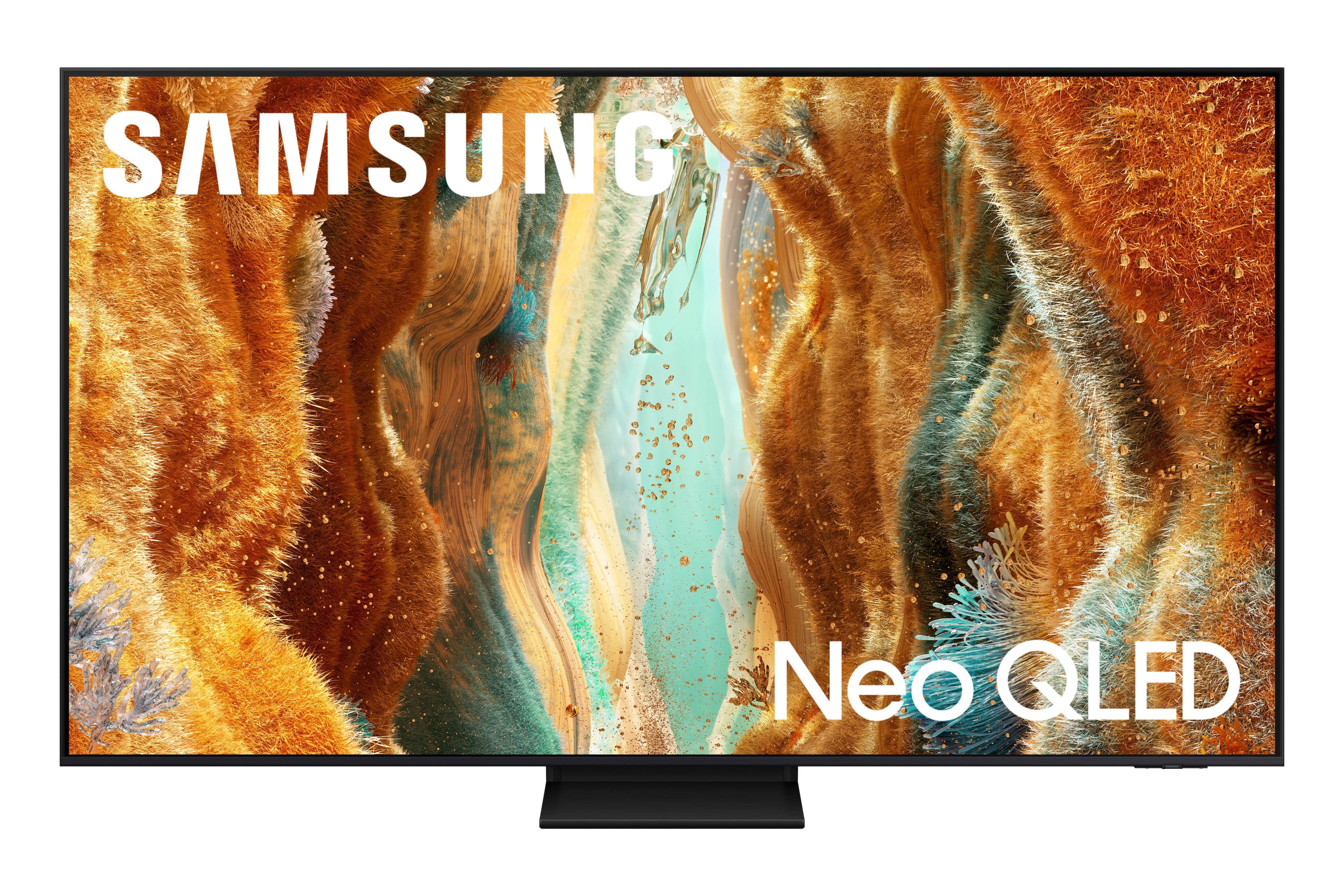
The Samsung 4K AI TV positions itself as an all-around performer rather than a specialist. The centerpiece is the NQ4 AI Gen2 processor, which uses machine learning to analyze and enhance content in real-time. Unlike basic upscaling that simply sharpens edges, this system recognizes different content types – faces, text, landscapes – and applies appropriate enhancement.
Quantum Matrix Technology with Mini LEDs provides the backbone for contrast and brightness. This isn’t Samsung’s top-tier display technology, but it represents a significant step up from edge-lit LED TVs while remaining more affordable than QD-OLED models.
| Specification | Details |
|---|---|
| Processor | NQ4 AI Gen2 with 20 neural networks |
| Display Technology | Quantum Matrix Mini LED |
| HDR Support | Neo Quantum HDR, HDR10+, HLG |
| Gaming Features | 4K 144Hz VRR, Motion Xcelerator Turbo+, FreeSync Premium Pro |
| Smart Platform | Tizen OS with 7-year update guarantee |
| Audio | Object Tracking Sound Lite, 40W output |
| Special Features | AI upscaling, Live Translate, Samsung TV Plus |
Real-World Performance & Feature Analysis
Design & Build Quality
The minimalist design looks premium initially, with thin bezels and a clean stand. However, the plastic construction feels less sturdy than more expensive models. During setup, I noticed slight flex in the back panel when handling the TV – not a dealbreaker, but indicative of where costs were cut.
The included stand provides adequate stability, though it positions the TV higher than some media consoles might accommodate. Wall mounting is straightforward, but the VESA pattern isn’t as universal as I’d prefer – you may need an adapter for certain mounts.
Performance in Real Use
Movie Watching: Streaming 4K HDR content from Disney+ and Netflix looks spectacular. The highlights in sunlit scenes or specular reflections in space movies have genuine punch. Where it struggles slightly is in letterboxed movies with subtitles – some blooming occurs around white text against black bars.
Sports Viewing: This is where the Samsung 4K AI TV truly shines. The motion handling keeps fast action crisp without the soap opera effect, provided you dial back the motion smoothing settings. Watching football, the ball trajectory remains clear even during long passes, and the AI processing does an impressive job maintaining detail in crowd scenes.
Gaming Performance: Connected to a PlayStation 5 and gaming PC, the 144Hz refresh rate delivers noticeably smoother gameplay than standard 60Hz TVs. The VRR implementation works flawlessly, eliminating screen tearing in demanding titles like Cyberpunk 2077. Input lag measures around 9ms in game mode – not class-leading but certainly competitive.
Ease of Use
Tizen OS boots quickly and navigates responsively, a significant improvement over earlier Samsung smart platforms. The interface, however, prioritizes content discovery over simplicity. You’ll encounter numerous promotions and recommended content, which can feel intrusive.
The AI features work mostly transparently. The upscaling automatically engages with lower-resolution content, while sound optimization adjusts based on content type. Live Translate is more gimmicky than practical – it works adequately for clear dialogue but struggles with accents or background noise.
Durability & Reliability
After continuous use for several weeks, the TV maintains consistent performance without overheating or noticeable image retention. The 7-year update promise provides peace of mind, though Samsung’s track record with long-term support is mixed – they’ve been better than most but occasionally drop features in older models.
The remote feels cheap but functional. Battery life is excellent, but the plastic construction seems prone to wear over time.
Pros & Cons
Pros:
- Exceptional AI upscaling that makes HD content look接近4K quality
- Outstanding motion handling for sports and fast-paced content
- Comprehensive gaming features that work as advertised with next-gen consoles
- Bright HDR performance that holds up well in well-lit rooms
- Long-term software support with 7-year update guarantee
Cons:
- Mediocre built-in audio requires external speakers for satisfying sound
- Noticeable blooming in high-contrast scenes with subtitles or stars against black backgrounds
- Ad-heavy interface that can feel intrusive during daily use
- Plastic construction feels less premium than competitors at similar price points
- Limited viewing angles with color shift when viewed off-center
Comparison & Alternatives
Cheaper Alternative: Hisense U8 Series
The Hisense U8 offers similar Mini LED technology at a significantly lower price point. You’ll get comparable peak brightness and good gaming features, but sacrifice the sophisticated AI processing and long-term software support. The motion handling isn’t as polished, and the smart interface feels slower. Choose Hisense if: You want maximum value and don’t mind occasionally fiddling with settings to get the best picture quality.
Premium Alternative: LG C4 OLED
Stepping up to LG’s OLED lineup gets you perfect blacks, infinite contrast, and wider viewing angles. The gaming features are equally comprehensive, and the design feels more premium. However, you’ll pay significantly more for similar screen sizes, and peak brightness falls short of the Samsung in bright rooms. Choose LG if: You’re a home theater enthusiast who primarily watches in dark rooms and values absolute image quality over brightness.
Buying Guide / Who Should Buy
Best for beginners: If you’re new to premium TVs, the Samsung 4K AI TV offers excellent out-of-box performance with minimal calibration needed. The AI features automatically optimize content, and the gaming mode engages seamlessly when you start playing.
Best for professionals: Content creators and serious gamers will appreciate the color accuracy in Filmmaker Mode and the comprehensive gaming features. The multiple HDMI 2.1 inputs support next-gen consoles and gaming PCs simultaneously.
Not recommended for: Audiophiles who expect quality built-in sound, or viewers who consistently watch from wide angles. The sound quality disappoints without external speakers, and the image quality degrades significantly beyond 30 degrees off-center.
FAQ
How does the AI upscaling handle older DVD content?
Surprisingly well, though with limitations. Standard definition content shows noticeable improvement in sharpness and reduced noise, but the processor can’t create detail that wasn’t there originally. 480p content looks watchable on larger screens where it would normally appear blurry.
Is the 144Hz refresh rate worth it for casual gamers?
Only if you play fast-paced games like shooters or racing titles. For casual or turn-based games, the difference from 120Hz is minimal. The lower input lag benefits all gaming, but the high refresh rate specifically matters for competitive play.
How intrusive are the ads in the smart interface?
They’re persistent but don’t interrupt content playback. You’ll see promoted content on the home screen and in the app selection menu. It’s more annoying than functional, but doesn’t significantly impact usability.
Does the Live Translate feature work with live broadcasts?
Yes, but with a 2-3 second delay. The accuracy is reasonable for clear speech in major languages but deteriorates with heavy accents or background noise. It’s a nice bonus feature rather than a primary reason to buy.
Is the 7-year update guarantee meaningful?
Absolutely. Most TV manufacturers provide 2-3 years of updates at best. Samsung’s commitment ensures your TV will receive security patches and likely new features through 2031, significantly extending its usable lifespan.